Every D2D salesman and sales leader knows volume drives revenue, but the real question is: how do you sustain it without burning out?
If you’ve run door-to-door teams, you know the grind: reps hit neighborhoods blind, scribble notes on paper, chase down the office for pricing updates, and lose leads in email threads.
The real issue isn’t hustle, it’s disjointed tools that fragment leads and kill follow-through. This is where door-to-door sales software consolidates route planning, real-time inventory, customer histories, and instant quoting into a single mobile hub.
Reps log interactions on-site, managers track KPIs live, and leads are closed before the door shuts. Teams hit more doors daily, and revenue grows without inflating payroll.
How to Build a High-Performance D2D Salesman Team: Roles, KPIs & Daily Routines
A high-performance door-to-door sales (D2D) strategy empowers sales reps and door-to-door salespeople to engage potential customers, build trust, and close high-value deals for products like solar panels, pest control, and home security systems.
The process focuses on communication skills, strong sales techniques, positive first impressions, and a clear value proposition that addresses the customer’s pain points.
In short: Successful D2D sales hinge on training, continuous improvement, strong product knowledge, and a structured sales process powered by analytics and discipline.
In this blog, we’ll learn how to build and scale a high-performance door-to-door (D2D) sales team by breaking down the exact roles, KPIs, daily routines, and systems that top-performing teams rely on.
The blog also covers proven D2D sales strategies, objection-handling techniques, training frameworks, and the role of modern tools and mobile software in improving territory management, follow-ups, and closing rates. By the end, you’ll have a practical blueprint to turn hustle into repeatable results and build a D2D team that consistently hits targets in real-world field conditions.
Key Takeaways
- A high-performance door-to-door sales team is built on clear roles, structured routines, and accountability across every stage of the sales process.
- Daily activity metrics and KPIs, like doors knocked, pitches delivered, follow-ups, and conversions, drive performance and predict future sales.
- Consistent training, shadowing, and practice in objection handling help sales reps improve communication skills and increase closed deals.
- Using the right tools, CRM systems, and mobile apps enables smarter territory control, accurate customer data, and faster follow-ups.
- Success in D2D sales hinges on mindset: self-motivation, resilience, and a strong work ethic separate top performers from average reps.
Ready to build a high-performance D2D sales team? Schedule a demo of Knockbase software today and hit 50+ doors from day one.
Understanding the Door-to-Door Sales Model
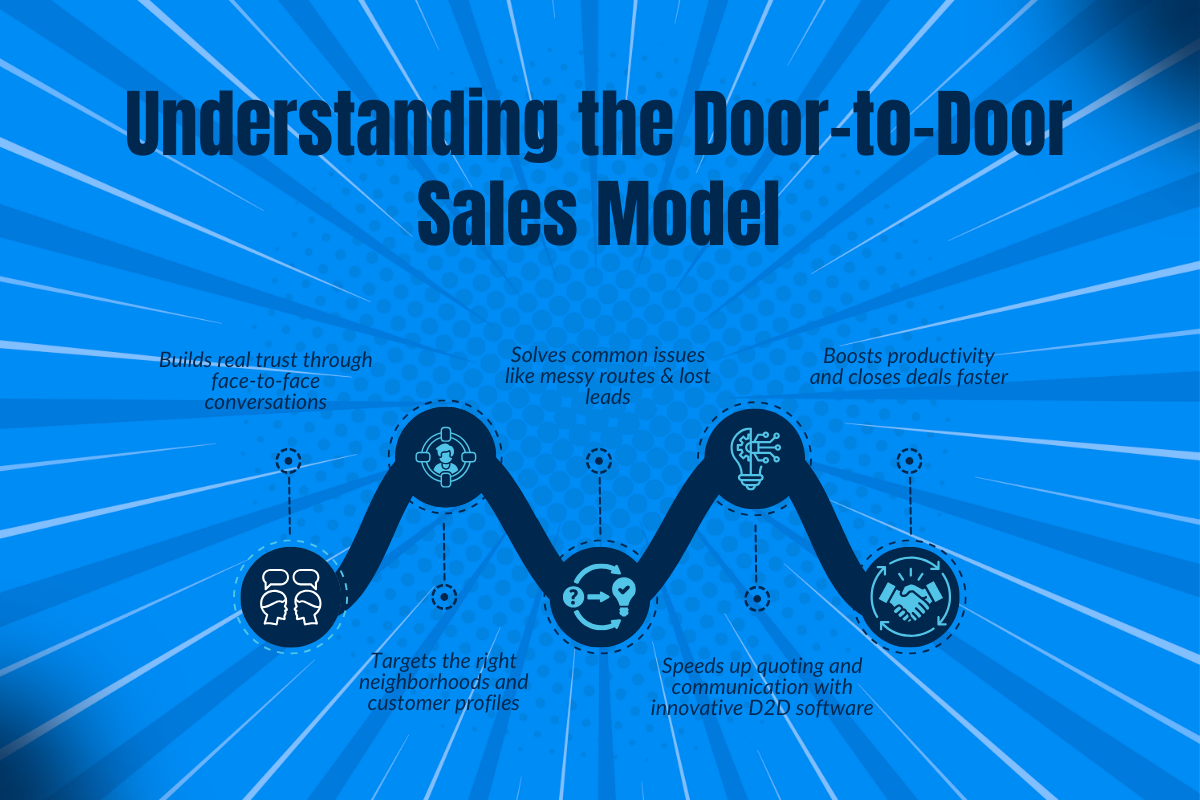
Why does the door-to-door sales model still hold strong in our digital world?
It’s simple: nothing beats the trust built in face-to-face conversations. People want real interaction, not just emails or ads.
So, who exactly should your sales team be knocking on?
The answer is: targeting matters. It’s about knowing which neighborhoods and customer types will say “yes” to your solar solutions. Moreover, using tools that zoom in on these prospects saves time and sharpens the sales pitch.
But what slows down door sales teams? Common pain points include messy routes, lost or scattered leads, slow quoting, and communication breakdowns between the field and the office. These issues drain energy and revenue.
Here’s the silver lining: Modern D2D software, which turns chaos into clarity by:
- Planning the smartest door-to-door routes
- Capturing lead data immediately on site
- Streamlining quote generation for faster deals
- Bridging communication gaps with real-time updates
This tech isn’t just helpful, it’s essential for boosting sales and keeping your team focused on what matters: closing deals.
What Are The Essential Roles in a Door-to-Door Sales Force?
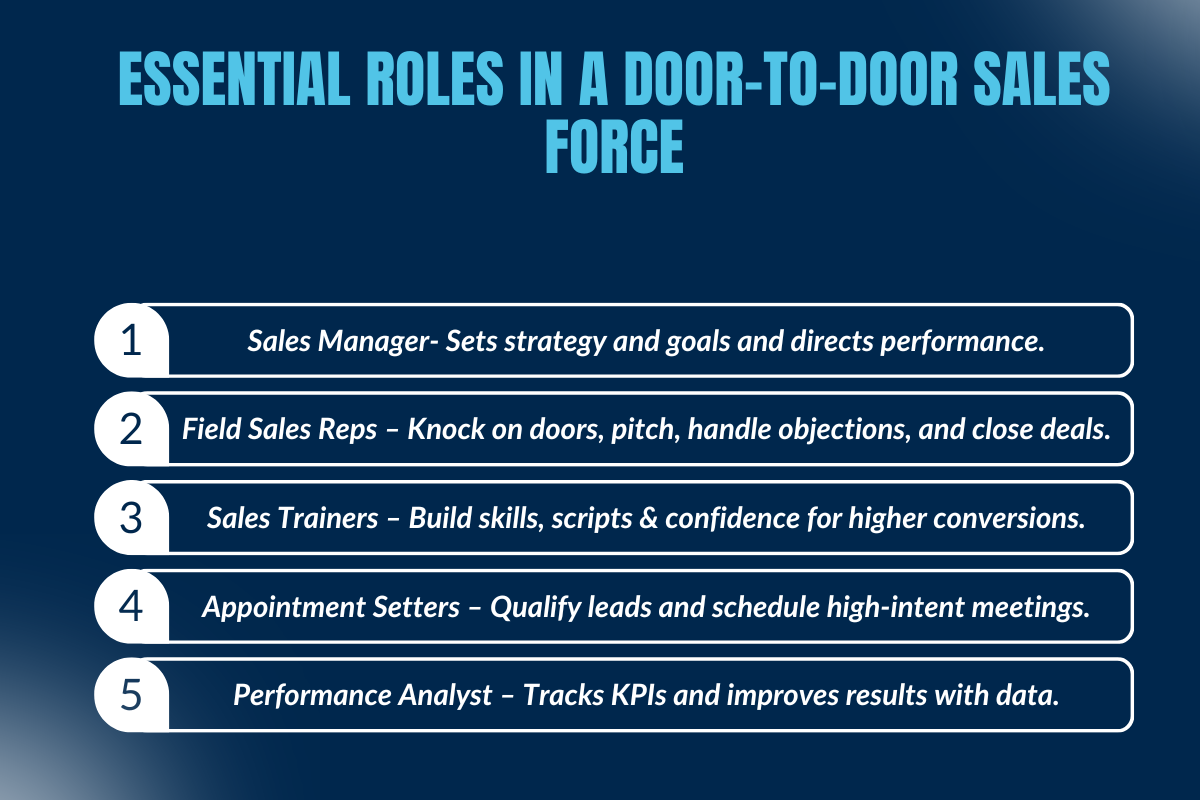
What makes a top-performing door-to-door sales team tick?
It’s the right people in the right roles, each driving the machine forward.
- Sales Manager – Accountability & Strategy: Sets revenue goals, territory plans, and monitors performance for disciplined execution. Example: Analyzes weekly data to redirect reps to high-engagement neighborhoods.
- Field Sales Representatives: They knock doors, pitch solutions, handle objections, and book appointments on the spot. Example: Adapts pitch instantly to homeowner concerns like energy bills, building trust fast.
- Sales Trainers & Coaches: Master product knowledge, scripts, and objection handling through role-plays. Example: Updates training to boost team confidence and closes.
- Appointment Setters & Lead Generators: Book qualified appointments and nurture leads. Example: Vets inbound inquiries to fill reps' schedules with high-intent prospects only.
- Performance Analyst: Tracks KPIs like doors knocked, conversions, and revenue. Example: Spots trends in contact rates to refine strategies weekly.
Traditional Channels That Still Work
Even in a world that is flooded with digital ads and online campaigns, tried-and-true sales methods still pack a punch, and here’s why they matter.
1. Face-to-Face Conversations
Nothing beats the power of personal connection. When a friendly rep shows up at the door, answers questions directly, and addresses concerns on the spot, trust builds quickly.
2. Strategic Neighborhood Targeting
Using data to pinpoint the best streets to canvass means no time wasted. Imagine focusing only on homes with older HVAC units or solar potential, maximizing every knock’s value.
3. Referral Magic
Happy customers are your best marketing channel. Turning their satisfaction into referrals with incentives like discount programs or exclusive offers creates a ripple effect that feeds your sales funnel.
4. Local Events & Engagement
Community fairs, home expos, or energy-saving workshops offer a stage to showcase products live. Letting prospects see real installations and hear authentic testimonials wins hearts in ways online cannot.
5. Partnerships with Local Businesses
Collaborate with neighborhood hardware stores or real estate agents to tap into established trust networks, a clever shortcut to warm leads and credibility.
Learn more in this guide: The Complete Guide to Door-to-Door Sales in 2026
Key Skills & Must-Have Attributes for Top Door-to-Door Salespeople
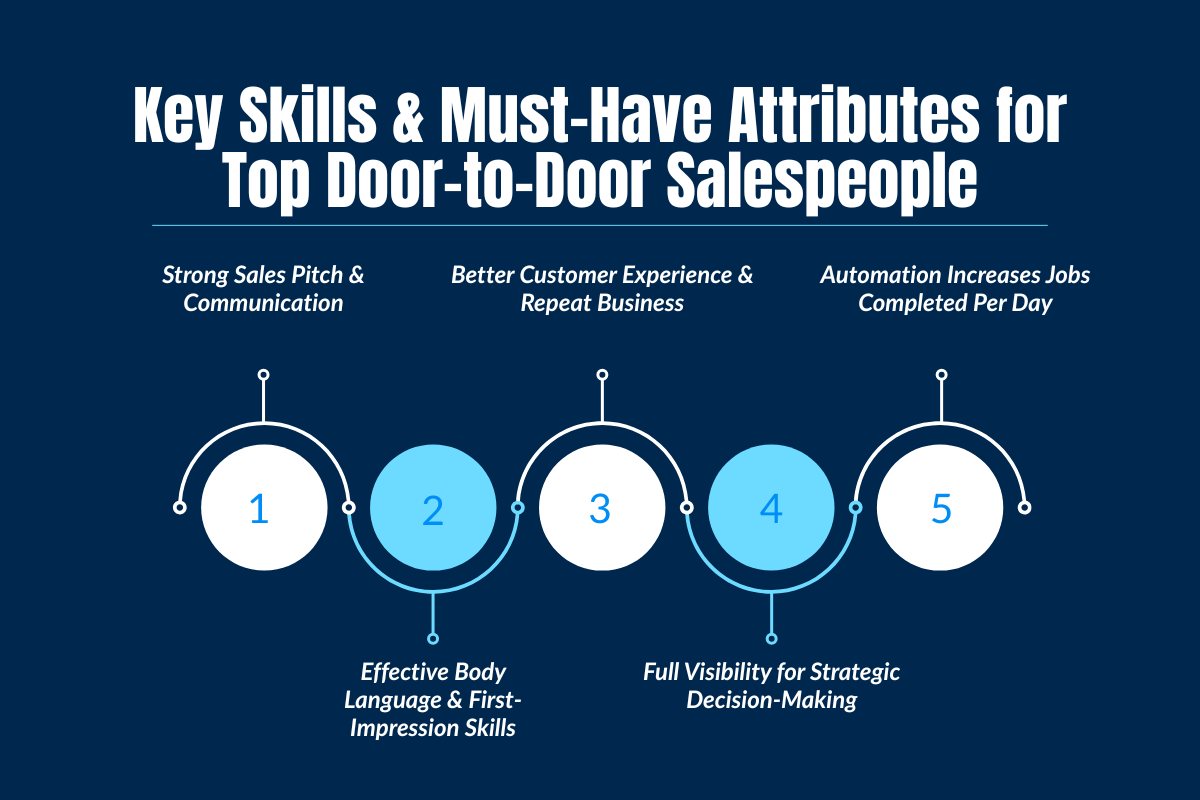
Mastering door-to-door sales goes beyond just showing up at the doorstep. It requires a unique blend of communication finesse, the right body language, expert objection handling, and the ability to close deals while building genuine trust.
Let’s explore the essential skills that separate the good from the great in this demanding field:
1. Strong Sales Pitch & Communication
Top sales reps deliver door sales pitches that hit home immediately, using active listening to address customer concerns and pain points.
Example: “Your AC looks like it’s been there a while. Newer models can cut energy bills by up to 30% and often qualify for rebates. Want a quick estimate on how much you could save?
This hooks into relevance and value proposition, and gathers information from the target audience.
2. Effective Body Language & First-Impression Skills
First impressions win doors in door-to-door selling. This is how:
Self-motivated reps approach with a positive attitude, a genuine smile, hands visible (no pockets), a slight head tilt showing interest, and respectful distance, makes homeowners feel safe and valued instantly while establishing expectations.
3. Handling Objections (energy costs, budget, timing, need)
Objections are rarely rejections; they are buying signals in the demanding nature of outside sales. Experienced sales representatives know that when a homeowner raises concerns about energy costs, budget, or timing, it means they are engaged and considering the decision. The key is to respond with empathy, clarity, and confidence rather than pressure.
Example (Budget Objection):
“I completely understand—upfront costs are a concern for almost everyone. That’s why we offer 0% financing options. In most cases, the monthly payment ends up being lower than what you’re currently paying on your utility bill.”
Example (Timing Objection):
“That makes sense. The good news is we can schedule the installation around your availability, even as early as next week. The process is quick, minimally disruptive, and fully compliant with local regulations.”
4. Ability to Close Deals & Earn Trust at the Door
Closing high-value deals in outside sales is less about pressure and more about timing and trust. When a representative clearly explains the process, qualifies the lead properly, and answers concerns upfront, the close feels natural rather than forced.
The strongest closes happen when urgency is real, value is clear, and the prospect feels respected.
Example:
“This home qualifies for the $1,500 rebate that expires this Friday. If it makes sense to move forward, we can lock that in today. I’ll also grab your business card so I can send everything over and keep you updated as we get things started.”
This approach is direct and sincere, reinforces real urgency, and secures contact details while maintaining professionalism and trust.
Explore this next: The Ultimate Guide to Becoming D2D Experts: Skills, Training & Tools (2026 Edition)
What Are The Proven Door Sales Strategies for High-Performance Teams?
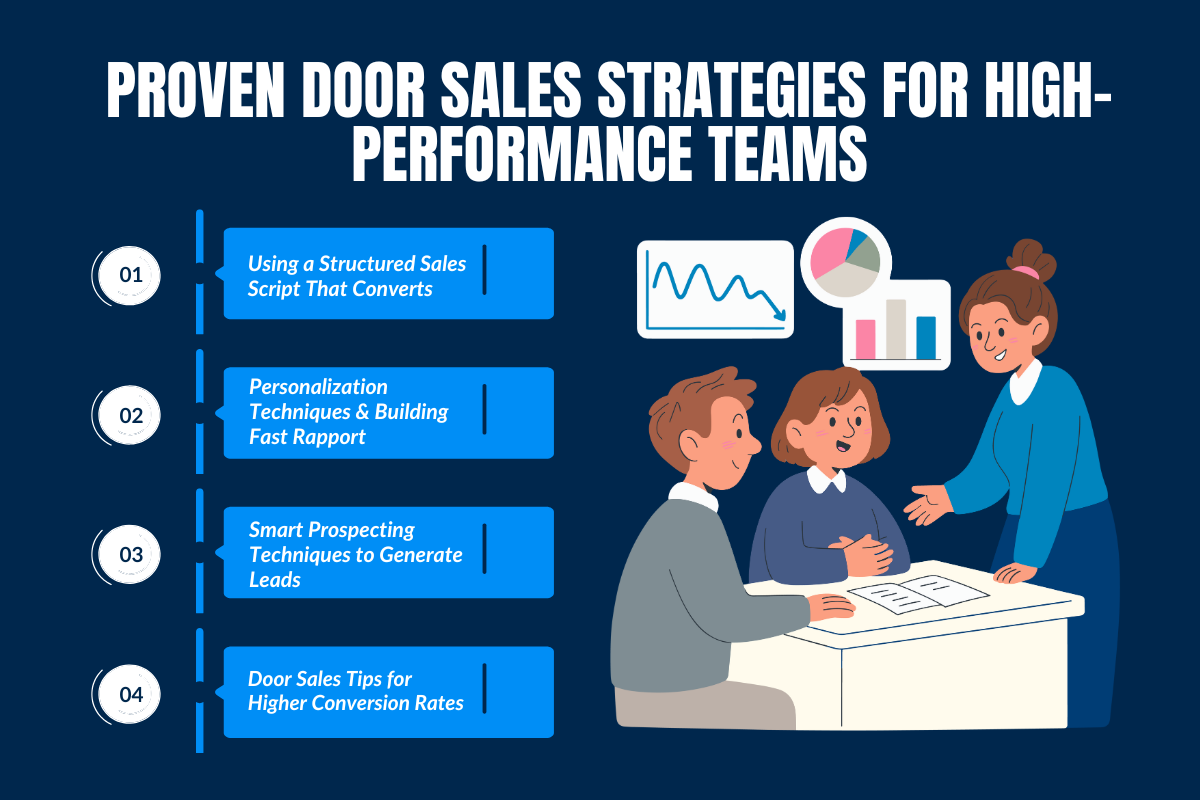
Mastering door-to-door sales requires a strategic approach that combines structure, personalization, and smart lead generation. These proven strategies help teams perform consistently at a high level.
1. Using a Structured Sales Script That Converts
A well-crafted sales script guides conversations smoothly and keeps prospects engaged. It ensures your message is clear, persuasive, and adaptable to different situations.
- Clear introduction emphasizing benefits
- Open-ended questions to understand needs
- Consistent call-to-action to close confidently
- Flexibility to customize based on responses
2. Personalization Techniques & Building Fast Rapport
Quickly connecting with prospects creates trust and opens the door for meaningful conversations. Personalizing your approach shows genuine interest and responsiveness.
- Use the prospect’s name and local references
- Match tone and body language for comfort
- Active listening to address specific concerns
- Share relatable stories or experiences
3. Smart Prospecting Techniques to Generate Leads
Targeting the right people at the right time increases the chances of success. Effective prospecting combines data insights and timing to maximize lead quality and quantity.
- Identify high-potential neighborhoods with data
- Leverage referrals for warmer introductions
- Visit during peak hours when prospects are home
- Maintain organized lead tracking for follow-ups
4. Door Sales Tips for Higher Conversion Rates
Small habits and techniques can dramatically improve your closing ratio. Confidence, preparation, and follow-up are key components of successful door sales.
- Dress professionally with a confident posture
- Address objections calmly and positively
- Use clear, compelling calls to action
- Follow up promptly after each visit
Performance KPIs for Measuring D2D Sales Success
Before diving into tactics, it’s important to understand how performance is evaluated. These KPIs serve as the foundation for assessing sales activity, optimizing conversion rates, and improving return on investment.
| KPI | What It Measures | Why It Matters |
|---|---|---|
| Conversion Rate & Closure Ratio | The percentage of prospects converted into satisfied customers. | Shows the effectiveness of door sales pitches, sales techniques, and the ability to handle objections in real-world selling environments. |
| Cost per Lead (CPL) & Cost per Acquisition (CPA) | Money spent to generate a lead or close a deal. | Helps optimize budgets, improve targeting, and increase ROI for direct sales and high-value items. |
| Average Revenue per Rep / Region | Revenue generated by each salesperson or territory. | Highlights top performers, encourages healthy competition, and motivates self-motivated sales reps to aim for more sales. |
| Sales Cycle Time & Efficiency | Time taken from the first door knock to the final agreement. | Helps identify bottlenecks and reduce delays in the sales process, resulting in a smoother customer journey. |
| Daily Doors Knocked, Pitches Delivered & Appointments Set | Activity level and consistency in field-based selling. | Measures real effort, supports forecasting, and reflects persistence critical in a demanding door-to-door sales job. |
Daily Routine for a Successful Door-to-Door Salesperson
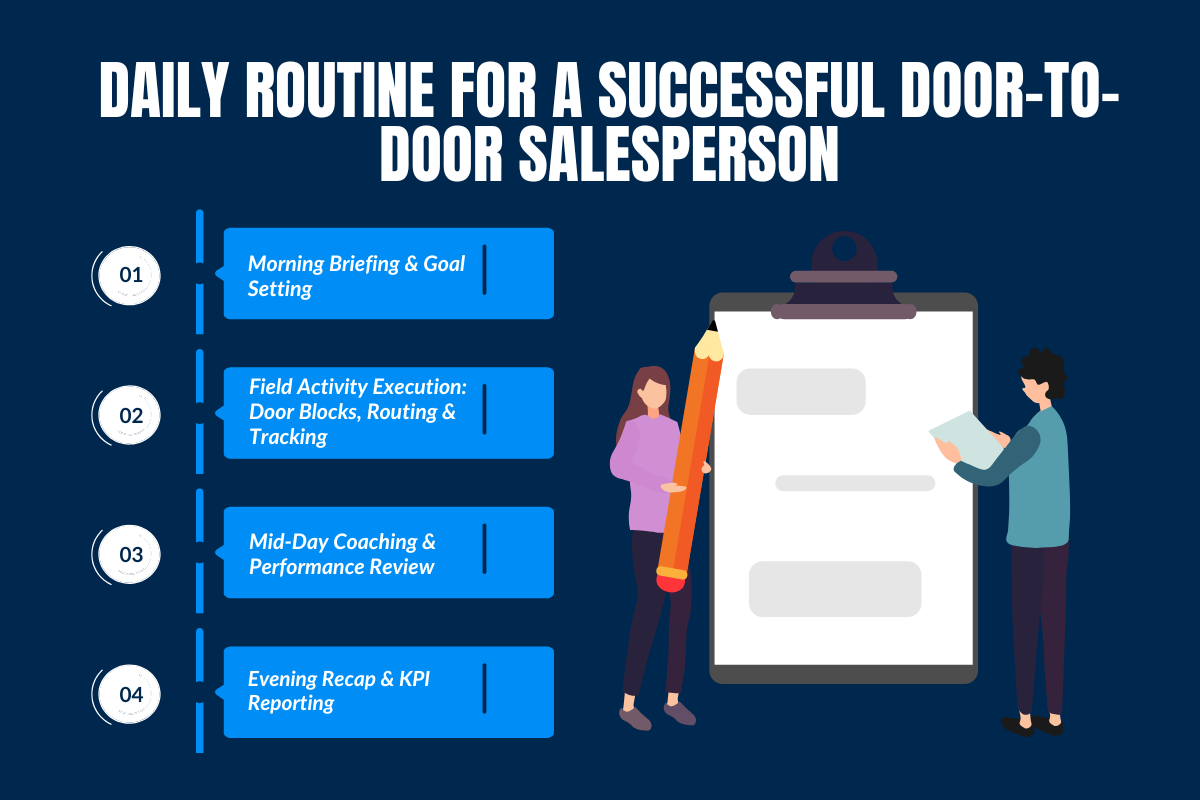
A winning day for a D2D salesman starts with discipline and ends with measurable progress. Whether you’re selling solar panels, pest control, home security systems, telecom services, or any high-value items, success hinges on structure, consistency, and a positive attitude.
A well-planned routine helps sales reps build stronger relationships, handle objections confidently, and convert potential customers into satisfied customers.
1. Morning Briefing & Goal Setting
Ever wonder how top D2D salesmen crush their quotas while others struggle? It starts here by kickstarting the day with laser focus and unstoppable energy.
What do you do first?
Set bold personal and team goals that guide your entire sales process, mapping out high-potential door blocks and your target market for maximum impact.
How do you prep like a pro?
Dive into customer data to review pain points, sharpen your door sales pitch, and align every word with your unbeatable value proposition, whether selling solar panels, pest control, or home security systems.
Example:
Review yesterday’s key performance indicators, analyze customer data, plan follow-ups, and ensure you have business cards, forms, and tools ready for door-to-door selling.
2. Field Activity Execution: Door Blocks, Routing & Tracking
Ready to turn door blocks into goldmines? This is where the real action explodes, hitting the field with unbreakable confidence and a battle-tested route to smash time-wasters and reach way more potential customers.
What powers your hustle?
A disciplined door salesperson leverages intelligent mapping, real-time tracking, and scheduling to skyrocket efficiency in direct sales and outside sales, covering high-value neighborhoods like a pro.
How do you own every door?
Qualify leads on the fly with data-driven insights, offer micro-value like “Neighbors here cut pest control costs by 30%, want the quick tip?” for solar panels or home security systems, and log prospect’s contact details instantly to fuel follow-ups and future sales.
Example:
Knock on doors in pre-qualified routes, gather prospects’ contact details, practice active listening, and tailor sales pitches to local needs such as energy savings, pest issues, or security concerns. Use every conversation to address customer concerns and build trust.
3. Mid-Day Coaching & Performance Review
Feeling the midday grind in door-to-door sales? This is your power reset. A strong sales team pauses to check progress, tweak strategy, and sharpen its sales approach.
What keeps you ahead?
Review key performance indicators to spot wins, polish objection handling like “I get the financial safety net concern, here’s how solar panels pay for themselves in year one,” and apply data-driven insights for killer conversion rates.
How do you stay fired up?
Stay motivated as sales reps, cut wasted effort, and fine-tune your pitch for pest control or security systems to drive more sales. Pure continuous improvement fuel!
Example:
Discuss objections encountered (budget, timing, trust), role-play responses, share door-to-door sales tips, and modify scripts to handle objections more effectively and qualify leads. Continuous improvement fuels success.
4. Evening Recap & KPI Reporting
End the day like a professional, analyze performance, record wins and losses, and measure productivity. Tracking key performance indicators ensures every salesperson grows daily and strengthens their financial safety net with commissions beyond base salary.
Example:
Log appointments booked, follow-up tasks, current customers updates, and insights gathered from neighborhoods. Reflect on what worked, where you can improve, and how to prepare for tomorrow’s sales efforts.
Training & Development Framework
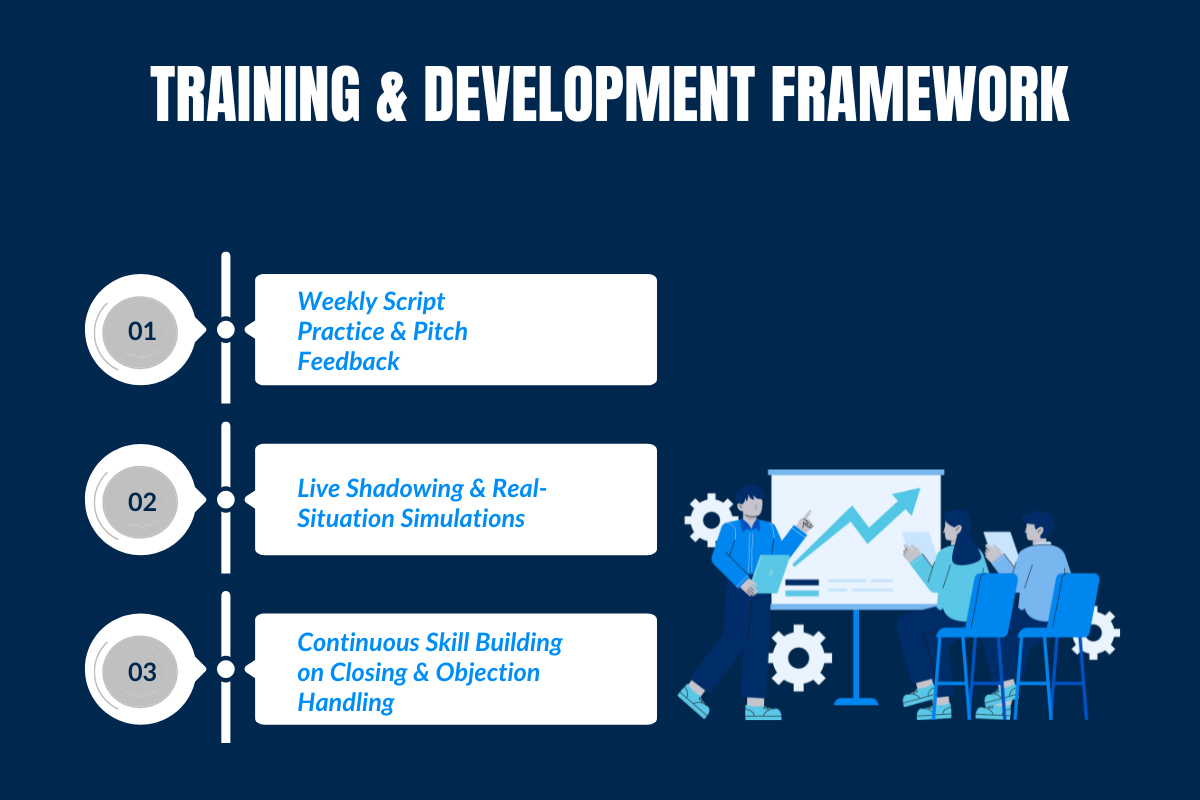
Practical training turns new door-to-door salespeople into confident, high-performing sales reps. This framework ensures every D2D salesman grows consistently and stays prepared for real-world door-to-door selling.
1. Weekly Script Practice & Pitch Feedback
Continuous practice sharpens delivery and strengthens communication skills, helping sales reps create a positive first impression at the door. Regular script coaching ensures every message is clear, confident, and aligned with customer needs.
Consistent rehearsal also helps improve tone, pacing, and structure throughout the sales process.
- Build confidence in door-to-door selling through structured pitch practice
- Improve communication skills, tone, and clarity
- Strengthen message alignment with customer pain points and the target market
- Encourage feedback-driven collaboration across multiple teams
2. Live Shadowing & Real-Situation Simulations
Watching top door-to-door salespeople in action provides real insights that can’t be learned from theory alone. Shadowing reveals how experienced reps overcome objections and build trust with potential customers.
Simulations prepare new sales representatives for real interactions before entering the field independently.
- Learn real-time sales techniques from high performers
- See real objections, reactions, and conversion strategies
- Gain confidence before knocking on doors alone
- Build practical field readiness and communication skills
3. Continuous Skill Building on Closing & Objection Handling
Success hinges on the ability to handle objections smoothly and close confidently, even under pressure. Ongoing development keeps salespeople sharp, adaptable, and ready to sell high-value products across various industries.
This ensures consistent improvement in key performance indicators, follow-up effectiveness, and overall conversion rates.
- Strengthen closing skills for solar, home security, telecom, and pest control
- Practice overcoming objections about pricing, timing, or trust
- Improve techniques to address customer concerns respectfully
- Support continuous improvement leading to more sales and satisfied customers
Tools & Systems that Improve D2D Sales Efficiency
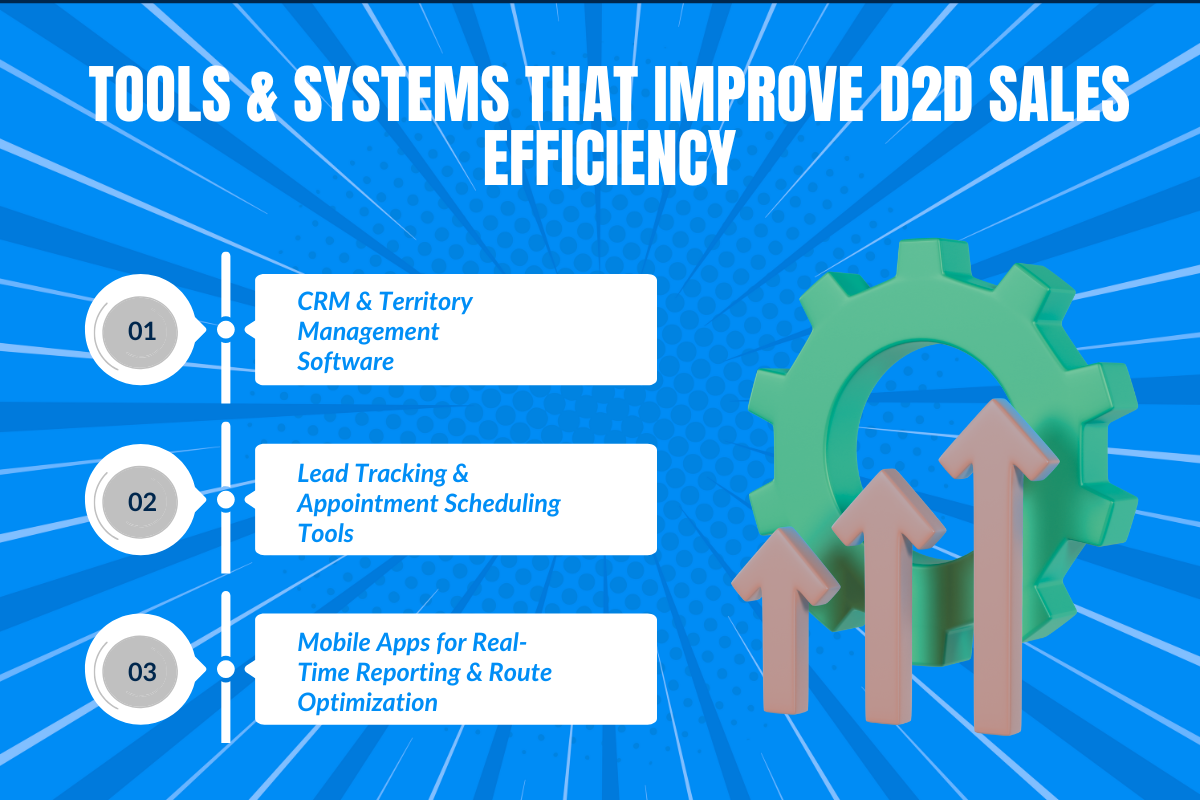
The right technology keeps sales reps organized, efficient, and focused on meaningful conversations. When systems run smoothly, reps spend more time selling and less time managing chaos.
1. CRM & Territory Management Software
A CRM gives door-to-door salespeople a clear view of territories, customer history, and follow-ups, helping them stay strategic instead of random. It keeps every lead organized, so no opportunity slips through the cracks, giving managers confidence in their team's follow-up process.
2. Lead Tracking & Appointment Scheduling Tools
Scheduling tools streamline the sales process, ensuring quick follow-ups and well-timed appointments. They help reps stay consistent and convert interested prospects into real meetings and deals faster.
3. Mobile Apps for Real-Time Reporting & Route Optimization
Mobile tools give d2d salesmen instant access to customer data, routing, and performance metrics while in the field. They help plan smarter routes, reduce time between doors, and simplify reporting with just a few taps.
Want to future-proof your D2D sales process? Learn the Future of D2D Sales: AI, Apps & Automation are transforming modern door-to-door selling.
Conclusion
As door-to-door salespeople, staying focused on the sales process, understanding the customer’s pain points, and delivering a clear value proposition are what separate average reps from top performers.
When sales representatives practice strong communication skills, handle objections with confidence, and consistently follow up, they build trust, expand the customer base, and secure future sales across multiple door sales industries.
Top-performing D2D reps don’t wait for opportunities; they create them by knocking with purpose, listening actively, and adapting fast.
Every door may not open, but every interaction sharpens skills, boosts confidence, and leads you closer to the successive big win.
About Knockbase
Knockbase is the all-in-one canvassing CRM built for door-to-door sales teams, turning chaotic field work into data-driven wins with real-time tracking, smart route planning, and gamified leaderboards.
Ready to Multiply Your Door-to-Door Sales Results? Stop guessing, start optimizing. Track routes in real time, automate follow-ups, and turn more doors into paying customers.
Book a personalized demo today and see how fast your team can scale.
FAQs
1. What is Knockbase, and who is it for?
Knockbase is an all-in-one canvassing CRM designed for door-to-door sales teams across industries such as solar, pest control, and home security. It helps sales reps track routes, capture leads, and close deals faster with real-time tools.
2. Does Knockbase work offline for field reps?
Yes, Knockbase supports full offline mode, reps can log interactions, qualify leads, and schedule appointments without internet. Data syncs automatically once back online, perfect for demanding outside sales.
3. Can I customize forms for my sales pitch?
Absolutely. Tailor digital forms to capture prospect details like names, pain points, and interests specific to your value proposition, whether selling high-value solar panels or security systems.
4. How does it help with route planning and territories?
Knockbase offers route optimization, territory mapping, and geo-tagging to efficiently assign door blocks, ensuring sales teams cover high-potential areas without overlap or wasted drives.
5. Does it integrate with my existing CRM?
Yes, seamless CRM sync exports leads and customer data directly into your pipeline, streamlining follow-ups and keeping your sales force aligned across tools.
6. How does Knockbase boost team performance?
Gamified leaderboards, real-time KPIs, and analytics motivate reps, track productivity, and provide coaching insights to improve objection handling and conversion rates.

Canvassing Software ROI: How Sales Managers Should Calculate Cost-Per-Knock vs Cost-Per-Lead in 2026