Manual door-to-door tracking creates severe hidden costs through lost productivity (data entry), fuel waste (poor routing), and lost leads (lack of follow-up). To fix this, field teams and delivery fleets must transition to mobile workforce management software.
Nobody writes "we lose leads here" in the employee handbook. It just happens. A rep knocks on a promising door, scribbles some notes, puts the paper in their pocket, drives to the next block, and by the time they get back to the office, the note is either unreadable, missing, or sitting under a coffee cup. Meanwhile, that prospect already answered a competitor's follow-up call.
This is how manual tracking actually works. It feels manageable. It looks organized. And it's quietly draining your sales team's potential one forgotten note at a time.
The uncomfortable truth? Manual tracking isn't a cost-free alternative to canvassing software. It's a choice to absorb hidden operational losses.
Key Takeaways
- Manual tracking carries hidden operational costs in missed leads, wasted follow-ups, duplicate coverage, administrative overhead, and unreliable strategic data.
- The costs compound at scale. What works for a two-person team becomes a serious liability for a team of ten or more.
- Every manual failure has a direct canvassing software fix: automated reminders replace forgotten follow-ups; territory management prevents duplicate coverage; real-time tracking replaces guesswork.
- The people paying the price include reps (lost earnings), sales managers (blind decision-making), campaign managers (wasted volunteer effort), and the organization (lost revenue).
- A self-assessment of your current operation is more useful than any feature comparison. Recognize four or more of the signs listed above, and the cost of change is almost certainly lower than the cost of continuing.
- Offline functionality is non-negotiable for any field team that works in areas with unreliable connectivity.
- Transparent pricing matters: the true cost comparison is canvassing software subscription vs. the ongoing operational losses of not having it.
Paper notes had a good run. A long, expensive, lead-losing run.
Your prospects deserve better than someone's pocket. Your reps deserve better than a system that relies entirely on their memory. And you deserve to know right now, in real time, what's actually happening in the field. Knockbase makes all of that possible. See What You've Been Missing Between Knocks.
The Real Cost of Manual Door-to-Door Tracking (And What Actually Fixes It)
If your team is still using spreadsheets, group chats, and handwritten notes to manage canvassing efforts, you've probably already felt the friction, even if you haven't put a number to it.
The reason most operations don't replace their manual systems isn't ignorance. It's the calculation that "free" is cheaper than a software subscription. That calculation is almost always wrong because the costs of manual tracking don't show up on an invoice.
They show up as reduced conversions, coaching decisions made without data, and field sales workflow that plateau long before they should.
This guide breaks down the hidden costs of relying on manual door-to-door tracking and explains how those inefficiencies impact lead management, territory coverage, follow-ups, and overall team productivity.
What Does "Manual Tracking" Actually Mean in the Field?
"Manual tracking" sounds like a specific system. It isn't. It's a loose collection of whatever tools a team defaults to when there's no dedicated platform: paper notes, shared spreadsheets, text chains, personal notebooks, and exported CSV files that no one updates consistently.
In most teams, manual tracking follows the same pattern:
- A rep finishes a conversation and quickly writes notes on paper or makes a mental note to update them later.
- The rep moves on to the next door, intending to enter the information into a spreadsheet or CRM at the end of the day.
- Later doesn't always happen. Notes get lost, details are forgotten, or the update is delayed until it's no longer accurate.
- When the data is finally entered, it depends entirely on how well the rep remembers the conversation. There's no standard format, no validation, and no real-time visibility for managers.
That's exactly why canvassing software exists. It replaces delayed, manual processes with real-time data capture, standardized workflows, and centralized visibility, so your team spends less time managing information and more time engaging with people.
What Is Manual Tracking Actually Costing Your Operation?
Manual tracking may seem manageable when your team is small, but it quickly becomes a bottleneck as operations grow. From missed follow-ups to inaccurate reporting, these small inefficiencies compound over time and directly impact productivity, customer experience, and revenue.
1. Leads Get Lost Before They Become Customers
The problem: Leads are often recorded on paper, in personal notebooks, or on scattered spreadsheets that aren't updated immediately. As the day gets busier, notes get misplaced, important details are forgotten, and some prospects never make it into the sales pipeline at all.
Why it matters: Every missed lead represents wasted time and a missed revenue opportunity. Your team already invested time starting the conversation, but without a reliable system to capture and track that interaction, those efforts often go to waste.
The fix: Use a canvassing platform that captures lead information in real time. Every conversation, note, and next step is stored centrally, while automated reminders ensure no opportunity is forgotten.
2. Follow-Ups Fall Through the Cracks
The problem: Manual follow-ups depend almost entirely on a rep's memory or handwritten reminders. After dozens of conversations in a single day, it's easy to forget who requested a callback or when the next visit should happen.
Why it matters: Many sales are won during the second or third interaction, not the first. When follow-ups are inconsistent, warm prospects lose interest or choose a competitor who responds more quickly.
The fix: Automated follow-up scheduling keeps every opportunity moving forward. Reps receive reminders based on lead status, ensuring callbacks and appointments happen at the right time without relying on memory.
3. Territories Get Covered Twice or Not at All
The problem: Without shared territory management, multiple reps may unknowingly visit the same neighborhood while other areas remain untouched. Managers also have limited visibility into which territories have already been covered.
Why it matters: Duplicate visits waste valuable selling time and create a poor customer experience. At the same time, uncovered neighborhoods represent lost opportunities that could have generated new leads and appointments.
The fix: Territory mapping and real-time coverage tracking allow managers to assign areas efficiently, eliminate overlap, and ensure every neighborhood receives the right level of attention.
4. Managers Can't Coach with Confidence
The problem: When field activity is tracked manually, managers rely on estimates instead of real performance data. It's difficult to verify how many doors were knocked, which conversations converted, or where reps are struggling.
Why it matters: Without accurate insights, coaching becomes generic instead of targeted. Managers miss opportunities to improve performance because they can't identify the specific behaviors driving results.
The fix: Real-time dashboards provide complete visibility into field activity, appointments, conversion rates, and territory performance. Managers can coach using actual data instead of assumptions.
5. Administrative Work Steals Selling Time
The problem: At the end of each day, reps spend valuable time updating spreadsheets, organizing notes, and sending manual status updates. Managers then spend additional time collecting and consolidating that information.
Why it matters: Every minute spent on administrative work is time that could have been spent talking to prospects, booking appointments, or following up with existing leads. These small tasks quickly add up across an entire team.
The fix: A centralized canvassing platform automatically records field activity, synchronizes updates, and generates reports in real time. This reduces administrative work and allows both reps and managers to focus on selling.
6. Poor Data Leads to Poor Decisions
The problem: Manual data entry often results in incomplete records, inconsistent information, and reporting gaps. Over time, this creates an unreliable picture of team performance and customer activity.
Why it matters: When your data isn't accurate, decisions about territories, staffing, sales strategies, and campaign performance become guesswork. Poor information leads to poor planning and missed growth opportunities.
The fix: Canvassing software standardizes data collection and automatically generates accurate reports. With reliable insights, managers can optimize territories, improve coaching, and make better strategic decisions based on real performance data.
Who Is Actually Paying the Price?
The costs of manual tracking are distributed unevenly. It's worth being specific about who absorbs them.
1. Door-to-door canvassers and sales reps spend more time on administrative tasks and less time at doors. They carry the frustration of missed follow-ups they couldn't prevent with the tools they had. In competitive door-to-door sales, this directly affects their earnings and their motivation.
2. Sales managers operate without real-time visibility into field activity, without reliable data to inform coaching, and without any early warning system when a territory or rep is underperforming. They make decisions in the dark and manage reactively.
3. Campaign managers spend time chasing data instead of directing canvassing strategy. They can't see how many doors were actually knocked, which volunteers completed their walk lists, or how voter identification results are trending because the information lives across dozens of individual phones and notebooks.
4. Small teams feel the impact proportionally more than large ones. When there are fewer reps to absorb inefficiency, each missed lead and wasted hour carries more weight. A good canvassing app transforms small team productivity faster than any other operational change.
5. The organization ultimately loses revenue, pipeline, and competitive ground slowly enough that the tracking system is rarely identified as the root cause.
What Does a Modern Canvassing Solution Actually Fix?
When the problem is framed correctly, not as "we don't have software" but as "we have specific operational failures that cost us leads and time daily," the solution becomes clear. Here's how each manual failure maps directly to a software fix:
| Manual Tracking Problem | Canvassing Software Fix |
|---|---|
| Paper notes and lost leads | Centralized lead management with instant mobile logging |
| Forgotten follow-ups | Automated reminders tied to door-outcome pipeline |
| Duplicate territory coverage | Territory management with real-time tracking and zone assignment |
| No manager visibility | Live dashboards with GPS and activity feeds |
| Hours of manual admin | Automated reporting tools and real-time data entry |
| Inconsistent strategic data | Real-time data collection with historical performance trends |
| Disconnected team communication | Shared platform with team messaging and walk list assignment |
| Inconsistent survey responses | Customizable surveys logged at the door, not after the fact |
| Route inefficiency | Route optimization and advanced mapping built for field ops |
| Data siloed in individual devices | All-in-one solution with real-time syncing across the team |
The pattern is consistent: every manual failure is a predictable consequence of tools that weren't built for field operations. And every one of those failures is solved by canvassing software designed specifically for them.
Is Your Team Showing the Signs? (Self-Assessment)
Before evaluating any platform, it helps to be honest about your current operational reality. Answer these questions as they apply to your canvassing strategy right now:
- Are your sales reps still recording door interactions by hand or in personal notes?
- Do your sales managers struggle to confirm how many doors were actually knocked on a given day?
- Have follow-ups been missed because there was no automated reminder system?
- Has the same prospect ever been contacted by two different reps from your team?
- Do you spend hours each week compiling reports that should generate automatically?
- Is your route planning based on intuition rather than data?
- Does your team track progress through group messages or informal phone calls?
- If a rep left tomorrow, would their lead data and canvassing results go with them?
- Can you see in real time what your field teams are doing?
If you answered "yes" to four or more of these, your operation is absorbing the costs described in this article every single day. The question isn't whether canvassing software would help; it's how much of that cost you're prepared to keep paying.
Choosing the Right Canvassing Software: What You Should Really Look For
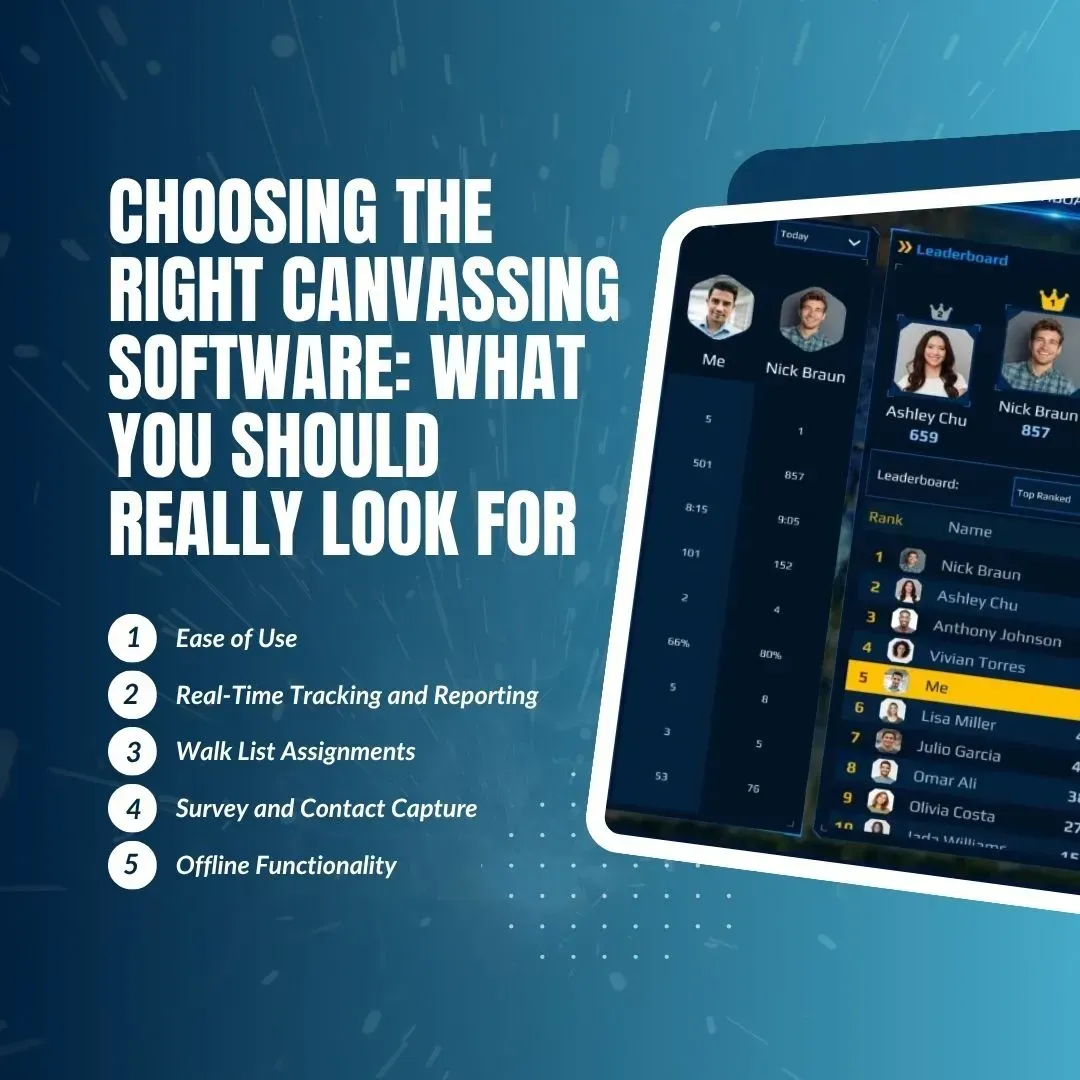
Recognizing the problem is step one. Choosing the right solution is step two. Here's what to prioritize when evaluating canvassing tools for a transition from manual systems:
1. Offline functionality first
A mobile canvassing solution that requires constant internet connectivity isn't a real field tool. Offline mode means sales reps can log data in low-signal areas, and it syncs automatically when connectivity returns. This is essential for teams in suburban or rural zones, and for political canvassing in areas with unreliable coverage. Always verify: does offline mode cover full functionality, or just read access?
2. Real-time tracking as a passive outcome
Real-time tracking should happen automatically as reps use the app, not something they manually enable. GPS logging, door outcomes, and activity timestamps should update without any extra steps.
3. Territory management that prevents overlap
Essential features include zone assignment, duplicate coverage prevention, and the ability to reassign territory instantly when field conditions change. Advanced mapping that lets campaign managers cut turf visually and push walk lists directly to reps is a major operational upgrade.
4. A user-friendly interface above advanced features
Advanced features are worthless if reps don't use the app consistently. The best mobile canvassing software requires minimal onboarding; reps should be capturing data accurately from day one. This matters even more for volunteer coordination, where volunteer engagement drops the moment the tool creates friction.
5. Integration with existing systems
Manual data entry is eliminated when canvassing software integrates with the platforms your team already uses. Look for bidirectional sync, clean field mapping, and straightforward data import from your current tools.
6. Transparent pricing that scales predictably
The ongoing cost of canvassing software should be clear. Watch for per-user fees that escalate as your sales team grows, or feature tiers that lock essential features behind enterprise pricing. Transparent pricing lets you calculate real ROI against the hidden costs you're replacing.
7. Reporting tools that require no manual compilation
The reporting capability that matters most generates real-time dashboards that show canvassing results, territory performance, and individual rep activity without anyone building a spreadsheet to find out.
How Knockbase Helps Eliminate the Hidden Costs of Manual Tracking?
Knockbase replaces manual tracking with a centralized platform that helps field teams capture data in real time, stay organized, and execute every step of the canvassing process more efficiently.
| Manual Tracking Challenge | How Knockbase Helps |
|---|---|
| Lost or forgotten leads | Capture every lead instantly with mobile lead management and centralized records |
| Missed follow-ups | Automate reminders and schedule callbacks so no opportunity is overlooked |
| Territory overlap | Assign territories, track coverage in real time, and eliminate duplicate visits |
| Excessive admin work | Replace spreadsheets and manual reporting with automatic data capture and live dashboards |
| Limited manager visibility | Monitor field activity, team performance, and territory progress from one dashboard |
| Poor route planning | Optimize routes to reduce drive time and maximize daily door knocks |
| Inconsistent data | Standardize data collection with customizable forms and real-time syncing |
| Disconnected systems | Integrate with your existing CRM to keep customer information synchronized automatically |
Why Teams Choose Knockbase?
Knockbase is designed specifically for organizations that rely on field outreach. Whether you're managing a door-to-door sales team, coordinating canvassing campaigns, or overseeing multiple field representatives, it brings your entire operation together in one platform.
From territory assignment and lead capture to follow-ups, reporting, and conversions, Knockbase manages the full lifecycle of a door-to-door lead in one app.
With Knockbase, your team can:
- Capture leads instantly without relying on paper notes or spreadsheets.
- Optimize routes and territories to reduce travel time and improve coverage.
- Automate follow-ups so warm leads never fall through the cracks.
- Monitor field activity in real time with live dashboards and performance insights.
- Reduce administrative work through automated reporting and CRM integrations.
- Scale confidently with a platform built to support growing field teams.
Instead of spending time fixing the problems created by manual tracking, your team can focus on what matters most: having more conversations, building stronger relationships, and converting more opportunities into results.
Conclusion
The case against manual tracking is about the specific, predictable, compounding operational failures that manual systems produce and the real cost of those failures compared to the cost of replacing them.
Every missed follow-up is a lead your team invested time and effort to generate and then failed to convert. Every duplicate territory visit is fuel spent and a prospect who's now less likely to trust your organization.
None of this is inevitable. It's the consequence of using tools that weren't designed for field operations to run field operations they were never meant to manage.
A good canvassing app replaces the entire fragile architecture of manual tracking with one that captures relevant data automatically, surfaces it in real time, and gives both sales reps and managers the tools to act on it without drowning in administrative overhead.
The cost of manual tracking isn't zero. It's just invoiced differently in missed revenue, wasted effort, and strategic decisions made in the dark. The only question is how long you're prepared to keep paying it.
See what your operation looks like without the manual tracking gaps
Every row that was never updated, every lead that slipped into a pocket and vanished, every follow-up that didn't happen the spreadsheet was there for all of it. Knockbase replaces it with a system that doesn't forget, doesn't need chasing, and definitely doesn't live in someone's truck. Request a Demo of Knockbase
FAQs
Is a free canvassing app sufficient for professional field operations?
A free canvassing app or free app can serve very small teams with limited canvassing efforts. But for teams tracking multiple reps across territories, managing walk lists, capturing survey responses, and requiring real-time tracking, free tools typically lack the essential features needed to prevent the operational failures described in this article.
What's the fastest operational win when switching from manual to digital tracking?
Most teams see the fastest results from follow-up automation and territory management. Automated reminders prevent the most immediate source of lost revenue: missed callbacks, and territory management eliminates duplicate coverage immediately. Both produce visible results within the first campaign cycle.
How does offline mode work for canvassing in low-connectivity areas?
Offline functionality in a mobile canvassing software solution allows reps to continue logging leads, capturing survey responses, and following route planning without an internet connection. Data syncs to the central platform automatically once the device reconnects, ensuring no field interaction is lost regardless of signal conditions.
What should I ask a vendor before switching from manual tracking?
Key questions include: Does the platform work fully offline? Can territories be reassigned mid-campaign in real time? Does it integrate with our existing systems? Is there a limit on users or walk lists? Is pricing transparent as the team scales? How long does onboarding typically take before reps are capturing data accurately?

Canvassing Software ROI: How Sales Managers Should Calculate Cost-Per-Knock vs Cost-Per-Lead in 2026