Door-to-door sales are often seen as outdated or ineffective, but that perception usually comes from poor execution rather than the channel itself. When there is no structure, no tracking, and no clear daily plan, even hardworking reps struggle to produce consistent results.
In reality, door-to-door sales can be one of the most powerful ways to build trust, communicate value face-to-face, and generate real momentum in a territory. The difference is strategy.
Success isn’t about pushing harder or memorizing scripts but about how sales teams think, prepare, and execute at a personal level.
The best teams rely on structure, product knowledge, and follow-up, not luck or charisma. This breakdown explains why some reps quietly outperform others.
Why Do Some Door-to-Door Salesman Teams Consistently Perform at a High Level?
Door-to-door sales aren’t dead, but poor strategies spread faster than good results. Industries like solar, security, roofing, pest control, and home services still use direct sales to quickly build trust.
The difference lies in execution. High-performing teams do not treat canvassing as random activity; they treat it as structured prospecting. They study territories, analyze past performance, and target neighborhoods where the product-market fit is strongest. Instead of knocking everywhere, they knock with intent.
A door-to-door sales job requires resilience to handle frequent rejection and the ability to improve sales techniques through experience. High-performance door-to-door sales teams don’t knock on every door blindly. They make informed decisions before the first contact.
This article breaks down what actually separates high-performing door-to-door sales teams from average ones. You will learn why structure consistently beats hustle, and how preparation, territory selection, and follow-up systems quietly drive higher close rates.
Key Takeaways
- Door-to-door sales still outperform many digital sales channels when structure replaces guesswork.
- High-performing sales reps focus on preparation, energy, and follow-up rather than pressure.
- First impressions, body language, and opening lines matter more than product features early on.
- Selling the next step builds more momentum than forcing a close at the first door.
- Territory management, timing, and target audience selection influence conversion rates
Want to See How High-Performance Door-to-Door Sales Works in Practice?
Watching a door-to-door sales team for a day changes how you see the work. Conversations are calm, reps move with intention, and homeowners engage rather than shut the door.
This isn’t about personality but about systems that guide where reps go, who they talk to, and how they schedule next steps. When that structure is in place, door-to-door selling feels natural rather than forced.
Get a closer look at how modern field sales teams run structured door-to-door sales in real neighborhoods.
What Is Door-to-Door Sales and Why Does It Still Matter?
Door-to-door sales, often called d2d sales, are a proven method where sales reps engage with potential customers directly at their homes or workplaces.
Unlike digital marketing, this approach puts sales professionals face-to-face with prospects, enabling real conversations, immediate feedback, and stronger trust-building.
This direct interaction allows reps to demonstrate products, handle objections in real time, and clearly explain solutions like home improvement services, solar panels, or home security systems.
As a result, door-to-door sales remain a powerful way to drive future sales and build lasting customer relationships.
What High-Performing Door-to-Door Sales Teams Do That Average Door Sales Reps Don’t?
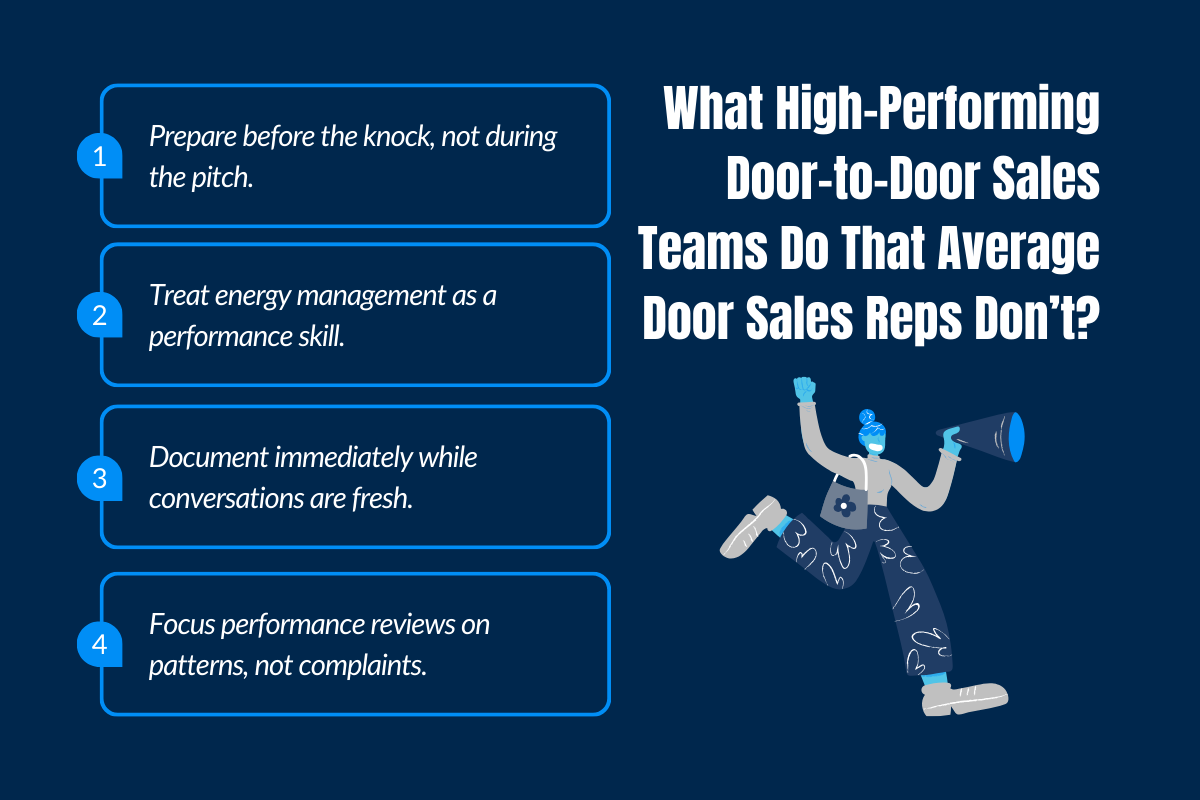
At first glance, top-performing door-to-door sales teams don’t look dramatically different from average door salespeople.
They knock on doors, face rejection, talk to prospective customers, and move on just like anyone else. The real difference shows up in habits most sales professionals ignore.
High-performance teams obsess over preparation, energy control, documentation, and review. These aren’t flashy sales techniques, but they compound over time.
The sections below break down the door-to-door sales practices that separate consistent performers from reps who struggle month after month:
1. Preparation Happens Before the Knock, Not During the Sales Pitch
Top door-to-door sales reps prepare thoroughly for each neighborhood, knowing why the territory matters and what homeowners care about.
High-performing reps also gather information on public opinion and customer preferences to target their marketing efforts better and refine sales strategies.
This makes their pitches seem conversational and respectful, not reactive. Using data and past conversations, they plan effectively, which shortens talks and improves first contact by reducing scrambling for info mid-pitch.
2. Energy Management Is Treated as a Performance Skill
Door sales are physically and emotionally demanding. Knocking fifty to seventy doors a day drains focus fast if energy isn’t managed intentionally.
Time management skills are crucial for ensuring that sales reps allocate their energy and attention efficiently throughout the day.
Successful reps treat their day like a long-term performance. They pace conversations, reset after rejection, and protect their focus later in the afternoon.
Instead of forcing enthusiasm, they stay calm and present. This helps sales professionals face rejection without burning out along the way.
3. Documentation Happens Immediately While Conversations Are Fresh
Memory fades quickly, and details blur over time, reducing the quality of follow-up. Therefore, successful sales teams document objections, timing, involved family members, and interest levels, turning brief conversations into actionable data.
Practicing product explanations with a family member helps ensure your pitch is clear and easily understood, even by someone unfamiliar with the product.
4. Performance Reviews Focus on Patterns, Not Complaints
Most door-to-door sales teams vent at the end of the day. High-performance teams debrief to improve. They look for patterns instead of blaming leads or current customers.
Which opening line worked? Which objections came up repeatedly? This coaching mindset helps reps refine their sales techniques.
Over time, salespeople stop taking rejection personally and start learning from it. That shift often makes all the difference between average door salespeople and top door performers.
How do the First 10 Seconds Decide Whether a Door-to-Door Salesman Won the Conversation?
Most door-to-door sales reps lose the interaction before the sales script even begins. Homeowners make instant judgments about safety, tone, and intent.
Aggressive tactics can come across as a stranger pushing, which increases resistance and reduces trust. Those first seconds determine whether the conversation continues or ends quickly.
Understanding what happens emotionally at the door helps reps adjust without sounding scripted. Additionally, addressing safety concerns and explaining how a product can enhance security can help alleviate homeowner fears.
Small changes in posture, facial expressions, and tone also dramatically improve the chances of a positive impression.
1. Homeowners Form Judgments Before the First Word Is Spoken
People assess intent immediately when a stranger appears at the door. Body language, facial expressions, and calmness communicate more than words.
A relaxed presence lowers resistance and builds emotional safety. This is why first impressions often outweigh product features early in door-to-door selling. When reps understand this, they stop rushing and start building rapport.
2. Body Language at the Door Signals Safety or Pressure
Standing too close triggers discomfort. Standing too far feels disengaged. Where a door salesman stands matters. Calm posture and neutral body language reduce tension.
Whereas rushed movements signal pressure. Strong sales professionals manage body language as carefully as they manage their words. These nonverbal signals often decide whether the door stays open.
3. Opening Lines Are Designed to Invite Conversation, Not Commitment
Strong opening lines feel curious, not transactional. Successful door-to-door sales reps avoid phrases that sound like a memorized sales script.
Instead, they frame the interaction around relevance and permission. A low-pressure opening line invites dialogue.
What reps avoid saying early is just as important as what they say. The goal is conversation, not closing techniques.
Why High-Performance Door-to-Door Sales Teams Don’t Try to Sell the Door on the First Knock?
Most deals don’t close at the first door, and high-performing sales teams accept that reality. Instead of forcing a sale, they focus on selling the next step.
That might be an inspection, an assessment, or a scheduled appointment. The ability to schedule appointments efficiently is a key factor in maximizing productivity and ensuring proper follow-up with prospects. This approach reduces pressure for both the salesperson and the homeowner.
The Door-to-Door Sales Follow-Up System That Separates Average Reps From Top Door Sellers
Follow-up is where most door-to-door sales processes fail quietly. Good conversations happen, then leads slip through due to poor tracking.
High earners treat follow-up as part of the first interaction. They set expectations clearly and log next steps immediately. Automated follow-up reminders and CRM syncing remove reliance on memory.
This is how top door sales reps manage more prospects without losing quality and create satisfied customers.
How Territory, Timing, and Conditions Quietly Impact Door Sales Results?
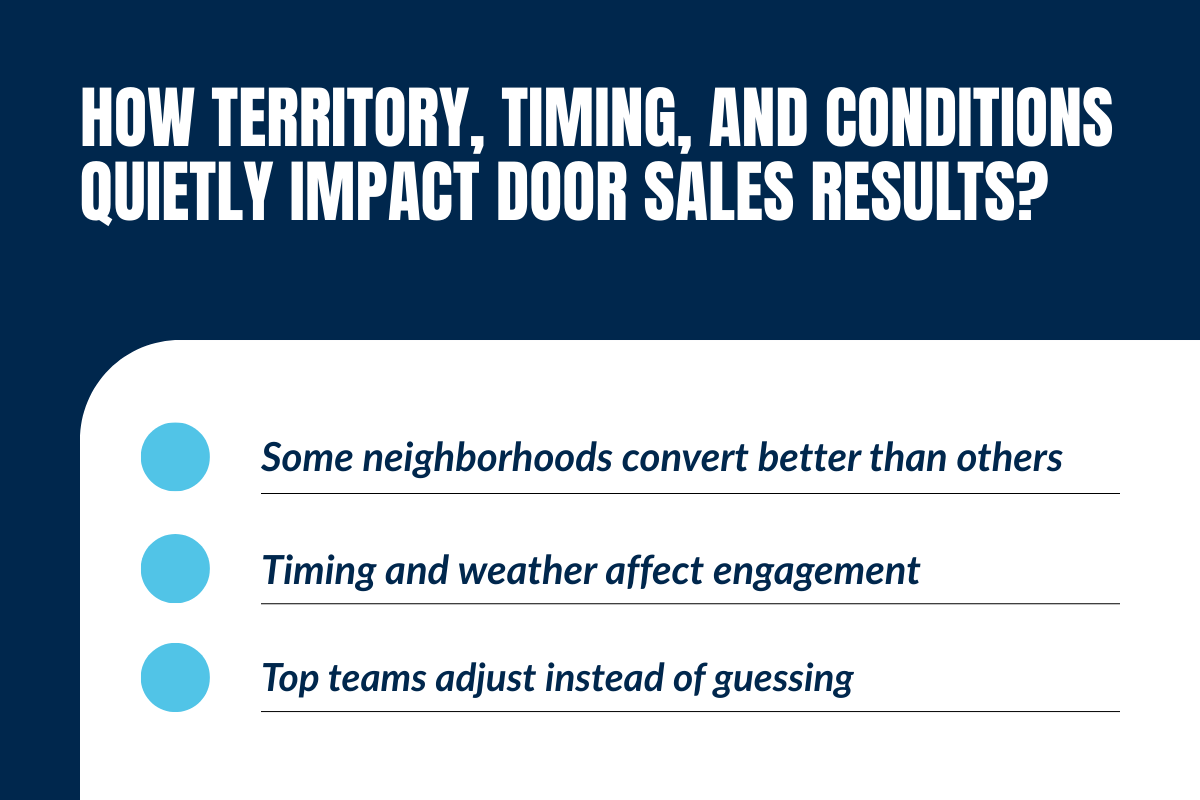
Some neighborhoods convert better than others, and it’s rarely random.
- Effective prospecting targets the right neighborhoods based on demographics, past activity, and target-audience fit.
- Timing matters as much. Knocking at the wrong hour wastes valuable time. Even weather impacts mood and availability.
- High-performance door-to-door sales teams analyze these factors rather than ignore them.
Territory management tools help sales teams adjust routes dynamically and stay focused on high-probability areas.
The Mental Game Every Door-to-Door Salesman Must Master to Stay Sharp
Rejection is unavoidable in door-to-door selling, but burnout doesn’t have to be. Successful reps separate outcome from identity, understanding that a “no” is part of the process, not a personal failure.
Each note becomes information, not judgment, which allows sales reps to stay emotionally steady throughout the day.
Sales teams that normalize rejection and provide consistent coaching retain reps longer and reduce frustration early in the sales job.
Structured onboarding and ongoing feedback help salespeople build resilience, emotional intelligence, and confidence over time.
When the mental side of door-to-door sales is intentionally managed, performance stabilizes, energy remains consistent, and reps are more likely to grow into long-term high performers.
Tools That Help Door-to-Door Sales Teams Sell Doors With Less Guesswork
Technology has reshaped outside sales by bringing structure to what was once a highly manual process.
1. Territory Mapping & Geo-Fencing Tools
Advanced mapping software allows teams to define territories with precision. Managers can assign neighborhoods, draw geo-boundaries, and prevent overlapping efforts between reps.
Geo-fencing ensures reps stay within assigned zones while leadership tracks territory saturation. This eliminates duplicate knocks and ensures full area coverage before expanding into new regions.
2. Route Optimization Software
Route planning tools sequence daily door paths logically by geography and time efficiency. Reps spend less time walking in circles or backtracking between streets.
For teams covering large suburban areas, optimized routing can increase productive door time significantly without extending work hours.
3. Automated Follow-Up Systems
Most D2D sales do not close on the first knock. Automated follow-up tools schedule reminders, SMS check-ins, or email sequences tied to each lead.
This reduces reliance on rep memory and increases conversion consistency. Leads are nurtured systematically instead of being forgotten when the next territory push begins.
4. CRM Integration Across All Systems
When canvassing apps, routing tools, and proposal software sync directly with a CRM, every interaction is stored centrally.
This ensures:
- No duplicate data entry
- No lost contact information
- Clean handoff between field reps and inside sales teams
A unified CRM backbone turns scattered activity into structured growth.
5. Mobile Canvassing Apps
Mobile-first canvassing tools allow reps to log each door knock in real time. Instead of remembering conversations at the end of the day, reps capture:
- Contact details
- Conversation outcomes
- Follow-up dates
- Objections or interest level
This creates instant visibility for managers and ensures no lead disappears between the doorstep and the next call.
What High-Performance Door Sales Managers Focus On Beyond Daily Numbers?
Strong door-to-door sales managers act as strategic leaders rather than just performance trackers. They focus on territory design, coaching, and emotional resilience to help sales reps perform consistently over time.
Metrics matter, but they’re not the complete picture of what’s happening in the field. Managers who review conversations, objection patterns, and follow-up quality, not just numbers, improve outcomes faster.
Leadership that understands the realities of door-to-door selling builds trust, reduces high turnover, and creates an environment where sales teams can develop and succeed long term.
How Knockbase Helps Modern Door-to-Door Teams Perform Like PROs?
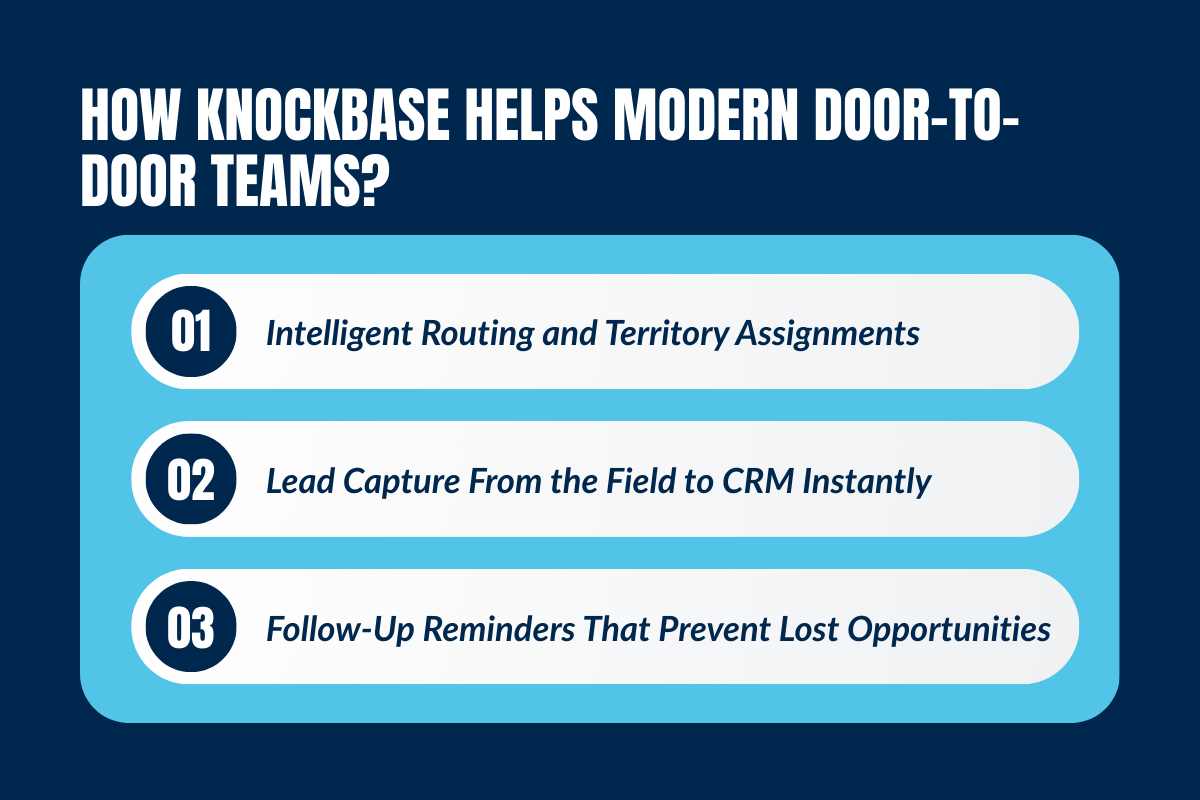
High-performing door-to-door sales teams rely more on structure than on motivation. When reps know where to go, what to log, and how to follow up, performance becomes predictable.
Knockbase helps field sales teams remove friction from routing, data capture, and follow-up so reps can focus on building relationships.
1. Intelligent Routing and Territory Assignments
Clear territory assignments eliminate overlap and wasted effort. Intelligent routing helps door sales reps focus on high-probability homes. This improves efficiency and morale across sales teams.
2. Lead Capture From the Field to CRM Instantly
Capturing information while conversations are fresh improves accuracy. Real-time syncing allows sales reps to log notes, objections, and follow-up timing. This improves coaching and long-term sales performance.
3. Follow-Up Reminders That Prevent Lost Opportunities
Automated follow-up reminders ensure no lead is forgotten. Consistency replaces memory-based selling. You can see how these workflows connect through the platform.
4. Real-Time Activity Tracking and Rep Accountability
Knockbase gives managers live visibility into daily rep activity. Instead of waiting for end-of-day summaries, leaders can see doors knocked, conversations logged, and appointments set in real time.
This level of transparency improves accountability without micromanagement. Reps stay consistent because performance is visible, measurable, and structured.
5. Performance Dashboards Built for Field Sales
Knockbase converts raw activity into meaningful metrics — conversations per hour, appointment ratios, close percentages, and territory performance.
Instead of relying on gut feeling, managers coach using data. Patterns become visible, and small daily adjustments compound into stronger monthly results.
In a Nutshell
High-performance door-to-door sales isn’t aggressive or flashy. It’s calm, structured, and intentional. Sales teams that invest in preparation, follow-up, and territory strategy consistently outperform those chasing quick wins. When systems support people, selling becomes sustainable.
Why Knockbase?
Knockbase helps door-to-door sales teams operate with clarity instead of chaos. By improving workflow efficiency, increasing data accuracy, and integrating with existing systems, teams gain visibility without complexity.
This allows sales professionals to focus on meaningful conversations rather than logistics.
Step into the Knockbase platform to see how this structure comes together in real time.
FAQs
1. What makes a successful door-to-door salesman stand out today?
A successful door-to-door salesman relies on preparation, emotional control, and follow-up rather than pressure tactics. Understanding the neighborhood, reading body language, and setting clear next steps help build trust with potential customers and improve long-term results.
2. Why does door-to-door sales still work better than digital channels for home services?
Door-to-door sales allow direct interaction, immediate answers, and trust-building that digital channels can’t replicate. For products like solar panels or security systems, homeowners prefer personalized explanations before making decisions.
3. How important is a clear sales pitch in door-to-door sales?
A clear sales pitch keeps conversations focused without sounding scripted. The best door sales reps adjust their pitch based on homeowner reactions, pain points, and questions rather than repeating the same sales script at every door.
4. What role does product knowledge play in door-to-door selling?
Strong product knowledge allows sales professionals to answer questions confidently and reduce hesitation. When reps clearly explain product benefits and limitations, homeowners feel more comfortable continuing the conversation.
5. Why do modern door sales teams rely on software tools?
Software helps door-to-door sales teams manage territories, track conversations, and follow up consistently. These tools reduce randomness, improve accountability, and allow reps to spend more time selling.

Canvassing Software ROI: How Sales Managers Should Calculate Cost-Per-Knock vs Cost-Per-Lead in 2026