In today’s digital world, where virtual screens dominate interactions, knocking on someone’s door might seem like an old-school approach. But guess what? It still works, and with the proper techniques, it can do wonders for winning hearts and building trust.
Door-to-door sales are all about taking the direct route: visiting people at their homes or workplaces, having face-to-face conversations, and addressing their questions immediately. It’s personal and genuine, and when done right, it leaves a lasting impression.
This blog is your go-to guide for mastering door-to-door sales. It will walk you through a strategic plan to help you approach prospects, establish connections, and confidently seal the deal. Are you ready to learn? Let’s get started!
Key Takeaways
- Significance of Door-to-Door sales: Door-to-door sales are relevant as they establish human connections and nurture mutually beneficial relations.
- Mastering Product Knowledge and Sales Pitch: In-depth product knowledge about the product, how to sell it, and a compelling sales pitch are crucial to building trust among potential customers.
- Streamlining door-to-door selling with digital tools: Leveraging digital tools, such as CRM software solutions, canvassing techniques, and GPS, can make the door-to-door selling process smoother.
- Customer-orientated strategy: Other key door-to-door sales tips include adopting a customer-centric approach and handling objections in a balanced way.
- Importance of Follow-ups: Timely and thoughtful follow-ups ensure a higher success rate. They clarify lingering doubts, enhance customer satisfaction, and gain referrals from ideal customers.
- Boosting productivity with Knockbase: Knockbase's comprehensive D2D sales software could be the ultimate choice for improving the productivity of door-to-door salespeople.
Why Do Door-to-Door Sales Remain Relevant in the Digital Era?
Door-to-door sales is a traditional method of selling products or services. However, it is still relevant in today's tech-driven world because of its advantages over digital sales processes:
- Its foremost strength is to foster human connection and engagement. It efficiently replaces virtual, impersonal interactions.
- It provides customers with the opportunity to communicate face-to-face. It helps them get their questions answered. One-on-one interaction can offer immediate clarifications. It helps customers gather information about the product or service more efficiently.
- It further simplifies understanding even the product's complex aspects. A personalized approach by a door-to-door salesperson enhances the overall consumer experience.
Moreover, the conventional sales method bridges the digital gap, catering to the technologically challenged and digitally deprived.
5 Key Strategies to Succeed in Door-to-Door Sales in the Digital Age
Here are a few door-to-door sales strategies that the top 1% are using. These will enrich salespeople's skills and empower companies to excel in D2D sales.
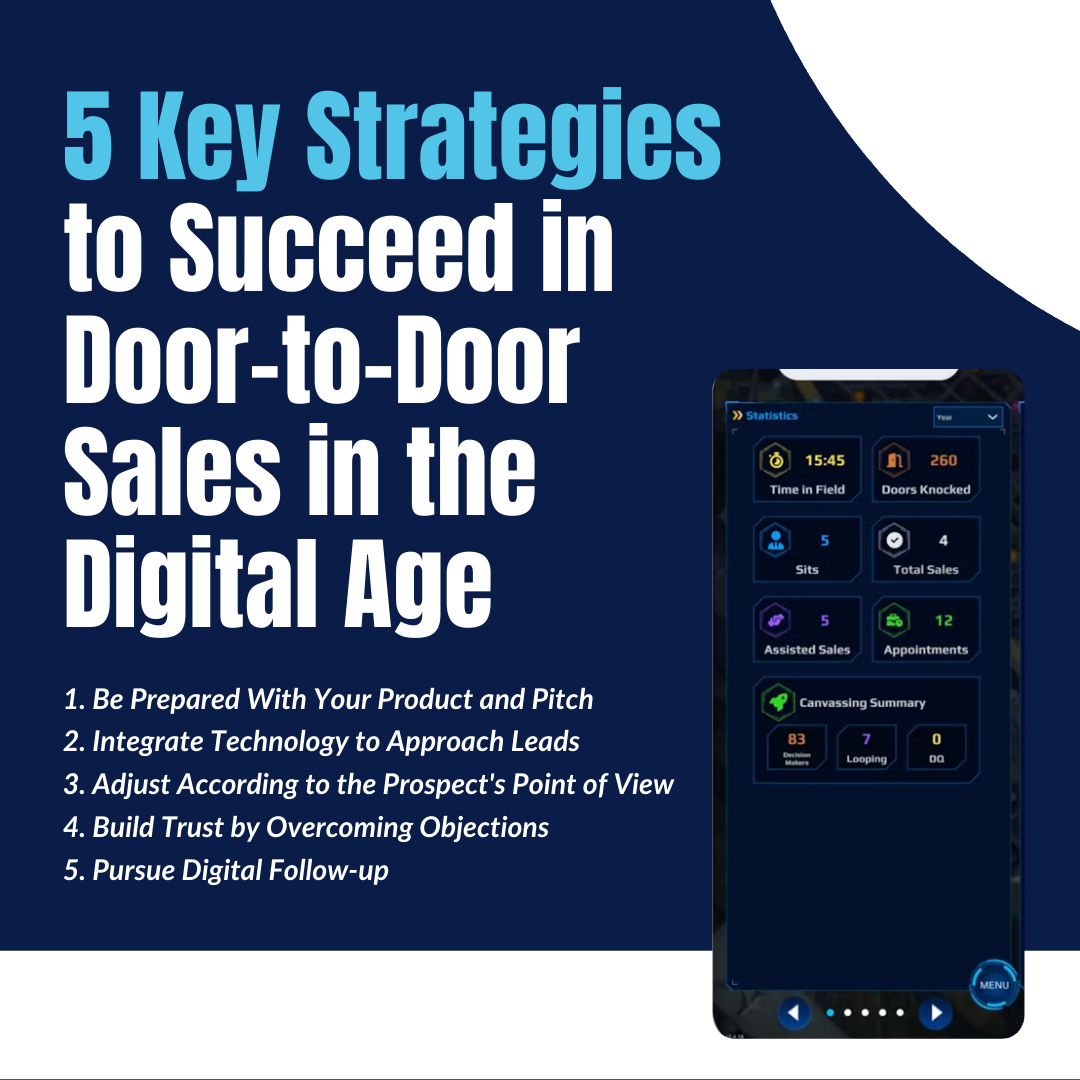
1. Be Prepared With Your Product and Pitch
A salesperson must thoroughly understand the product or service they are selling. This understanding should meet customers' expectations, as they expect a sales rep to be well-informed about the product or service. It also helps the salesperson gain customers' trust and confidence.
Answering customers' questions is crucial for door-to-door salespeople. This enables customers to finalize their decisions about purchasing a product or service. Knowledge about the product, combined with its effective presentation, enhances the success rate of sales teams.
One selling the product to the target market or target audience should consider themselves as the product's voice. The more effectively a pitch communicates the product's features and establishes its credibility with new customers, the greater the chances of success.
2. Integrate Technology to Approach Leads
Combining the traditional approach with modern technology can impact potential customers indelibly. For instance, digital tools or mobile devices like GPS can be utilized to optimize travel routes for effective door-to-door selling.
The software facilitates more systematic door-to-door canvassing. It reduces time spent wandering around and can save valuable time out there. It also keeps a record of homes visited and improves overall efficiency.
Customer Relationship Management (CRM) solutions make follow-ups and grievance redressal mechanisms smoother.
Also, the digital business card allows sales representatives to share their details conveniently. Incorporating these technological advancements improves efficiency and amplifies the effectiveness of door-to-door sales efforts.
3. Adjust According to the Prospect's Point of View
Every customer is unique, and so are their needs and challenges. It mandates a door-to-door salesman to be flexible in their pitching.
If a customer has specific issues, a sales rep must identify the prospect's pain points. The sales rep should demonstrate how the product can resolve the prospect's pain points or issues.
Tailoring the sales script and pitch to customers' preferences and concerns is a critical skill. The body language and sales script should reflect empathy and a personal touch.
It strengthens the connection with the potential customers, increasing the chances of successful door-to-door sales.
4. Build Trust by Overcoming Objections
Objections are an obvious part of the sales process. A sales rep should see them as an opportunity to offer more information and better address the needs of prospective and current customers.
With a good understanding of the product and by anticipating customer behavior, common objections can be predicted.
However, the first step for a salesperson is to listen to and understand a prospective customer's concerns actively. Then, without getting into an argument, the salesperson should respond positively.
A salesperson should build trust with potential customers by maintaining eye contact. The sales rep should explain to them how the product can add value to their lives.
5. Pursue Digital Follow-up
Stopping interaction after the initial visit is not an appropriate technique. Instead, follow-ups are essential. Sales teams should be sure to collect prospect's contact details.
Sending a thank-you email or text to express appreciation for their valuable time creates a positive impression.
Follow-ups gently remind potential customers about the product and allow sales professionals to obtain valuable feedback.
Through them, sales professionals can resolve any queries that potential customers may have. In the case of successful deals, follow-up connections can also lead to referrals from satisfied customers.
Knockbase Door-to-Door Sales Software
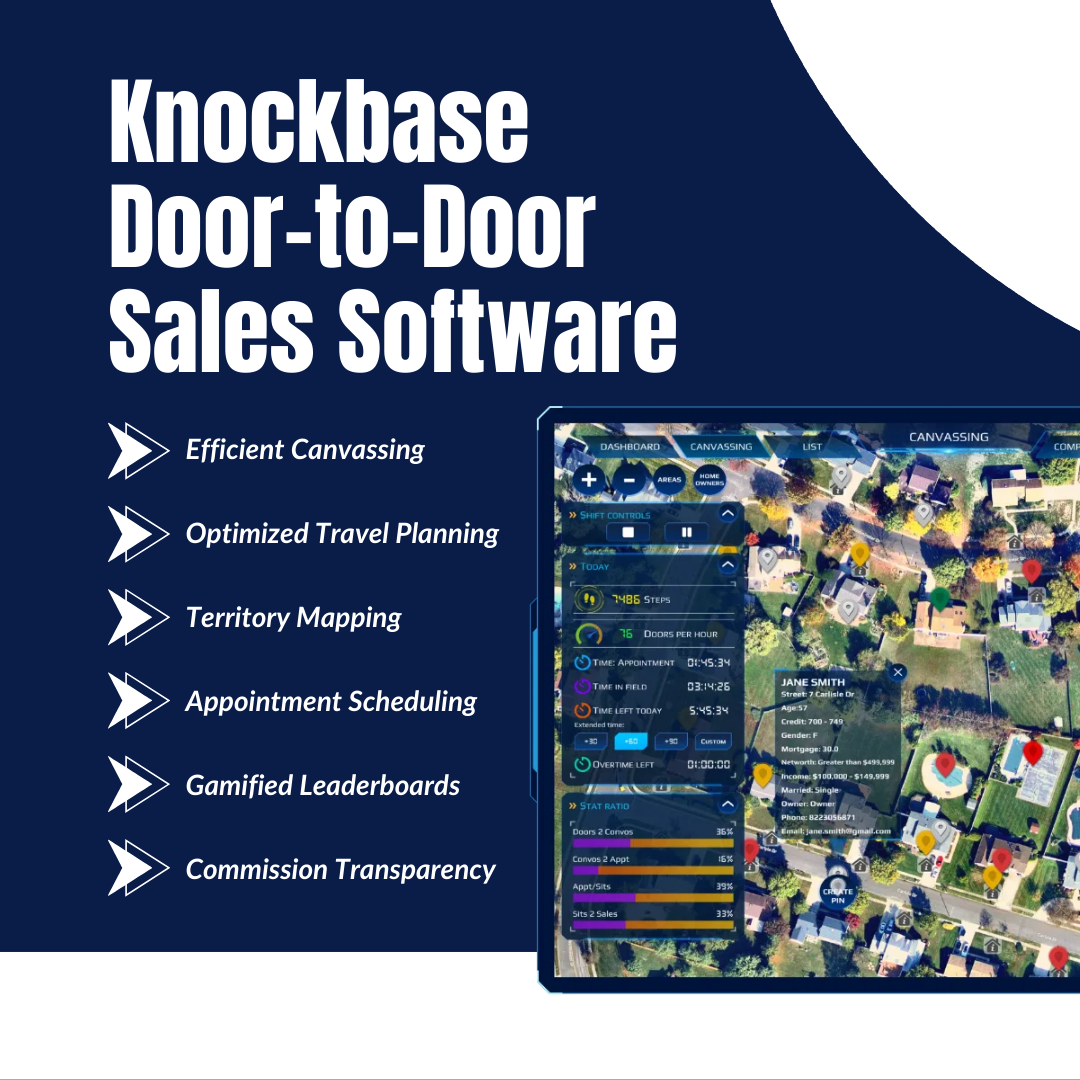
Knockbase provides a holistic platform for managing door-to-door salespersons and customers. The software suite has features like canvas management, route optimization, geo-tagging, customer-base data collection, etc.
These tools from Knockbase collectively support the growth and efficiency of door-to-door sales and other sales activities. Mentioned below are the prominent features of the Knockbase D2D sales tool:
1. Efficient Canvassing:
Customizable data pins provide different information sets for sales reps and help regional managers track door-to-door salespeople in real time. Reps can instantly view prospect status, previous interactions, lead quality, and follow-up requirements directly from the map. This helps teams prioritize high-value opportunities, avoid duplicate outreach, and ensure every neighborhood is canvassed systematically.
2. Optimized Travel Planning:
Customized travel plans maximize returns while reducing time spent on the road. Using geographic and territory data, Knockbase creates efficient routes that minimize unnecessary travel, fuel consumption, and downtime. This allows sales representatives to spend more time engaging with prospects and less time navigating between locations.
3. Territory Mapping:
Geographic territory mapping helps businesses divide sales regions strategically and ensure complete market coverage. Managers can assign territories, monitor performance by region, prevent route overlaps, and identify underserved areas with strong sales potential. This creates better accountability and improves resource allocation across the team.
4. Appointment Scheduling:
Built-in appointment scheduling helps sales representatives organize meetings, follow-ups, and customer visits more effectively. Automated reminders reduce missed appointments, while calendar visibility helps managers coordinate field activities and avoid scheduling conflicts. The result is a more structured and productive sales process.
5. Gamified Leaderboards:
Real-time leaderboards encourage healthy competition by ranking sales representatives based on key performance metrics such as appointments booked, doors knocked, leads generated, and deals closed. Recognition, rewards, and performance-based incentives help boost motivation, increase engagement, and drive stronger team performance.
6. Commission Transparency:
Knockbase provides clear visibility into targets, commissions, and performance metrics. Sales representatives can track their progress toward goals in real time, while managers can monitor individual and team performance. This transparency reduces disputes, strengthens accountability, and motivates reps by clearly connecting effort to rewards.
Conclusion
Door-to-door selling simplifies and personalizes the sales process. It also relieves sellers' and buyers' stress from door-to-door marketing and purchasing. Face-to-face interaction eases communication and understanding.
A strengthened D2D sales approach and innovative digital marketing practices can create a balanced business approach that can lead to massive success and prosperity.
Tools like the Knockbase door-to-door sales software can take things to the next level. By streamlining operations and boosting efficiency, it helps sales professionals achieve better results faster. It is a game-changer for anyone in the sales industry striving to stay ahead.
Although door-to-door sales have stood the test of time, evolving with the changing landscape is crucial. Embracing this evolution will prevent stagnation and ensure sustained benefits for businesses and buyers.
About Knockbase
Improve your door-to-door sales strategy with Knockbase and experience the benefits of its impactful door-to-door sales software. Let Knockbase assist you in efficiently knocking on doors!
Without further ado, request a demo!
FAQs
1. Is door-to-door selling still relevant?
Yes, it is still relevant because of its direct, simple, and impactful approach.
2. What makes a good door-to-door salesperson?
A salesperson with strong knowledge about the product, an appealing sales pitch, and a positive attitude can succeed in D2D sales.
3. What makes a successful door-to-door sale?
Building a strong rapport with the prospective customer and demonstrating the product's credibility are key factors leading to a successful D2D sale.
4. What makes a successful door-to-door sale?
Successful strategies now focus on better targeting, stronger communication, and personalized interactions rather than just covering more ground. Combining preparation with meaningful conversations helps reps stand out even when customers are used to digital outreach.
5. How can sales teams combine traditional and digital approaches effectively?
Teams can use digital tools to identify prospects and manage follow-ups while using in-person interactions to build trust and close deals. This combination allows businesses to benefit from both scale and personal connection, improving overall sales outcomes.

Canvassing Software ROI: How Sales Managers Should Calculate Cost-Per-Knock vs Cost-Per-Lead in 2026